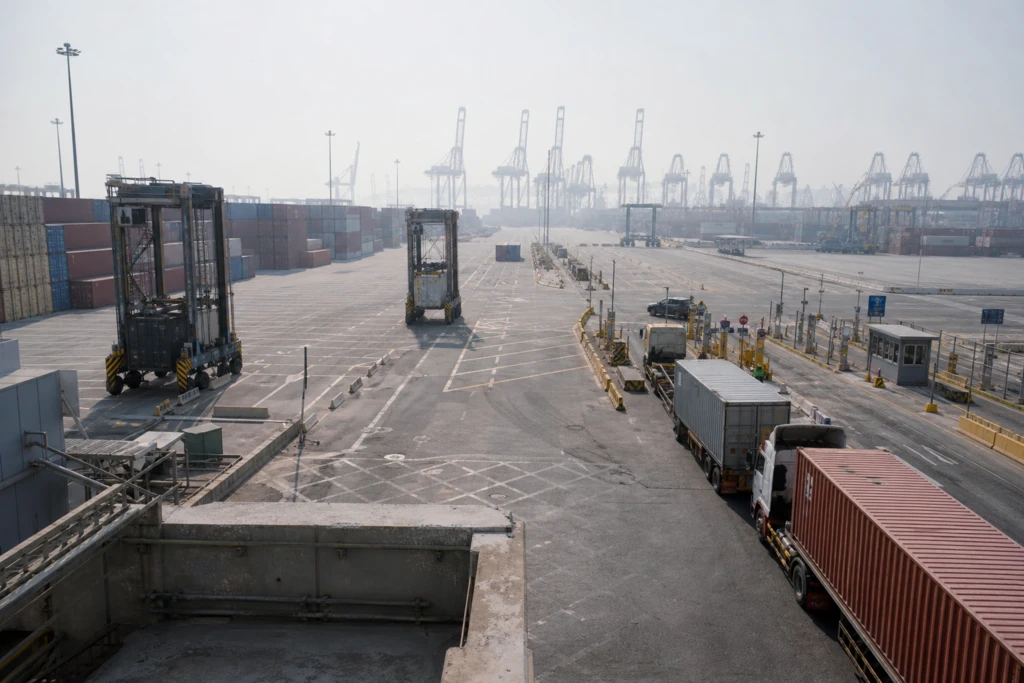
Saudi Arabia Jeddah Islamic Port is being treated as a practical alternative gateway when routing inside the Gulf feels uncertain. In mid-July 2026, a forwarder report described the port as jammed, with yards close to full and trucks backing up for kilometres outside the gates. The same account says cargo bound for the UAE, Oman, Qatar, Kuwait and Bahrain is increasingly moving overland from Jeddah rather than sailing direct to those markets. The trigger earlier in 2026 was uncertainty over the Strait of Hormuz, which made the “land bridge” logic attractive, and the report argues that volumes kept climbing even after a ceasefire eased the original worry.
At the same time, the port is also posting measurable throughput highs. Jeddah Islamic Port handled 540,107 TEU in July 2026, described as the highest monthly container total in its history. That figure is 14.0% above the previous published high of 473,676 TEU in June 2023. Operational load extended beyond the quayside too, with approximately 20,000 truck movements reported through the gates each day in the same month. One terminal-level datapoint supports the broader picture: DP World’s South Container Terminal handled more than 221,200 TEU in July 2026, its highest month since operations began in 1999.
Capacity vs. Fluidity: Why Congestion Changes the Cargo Math
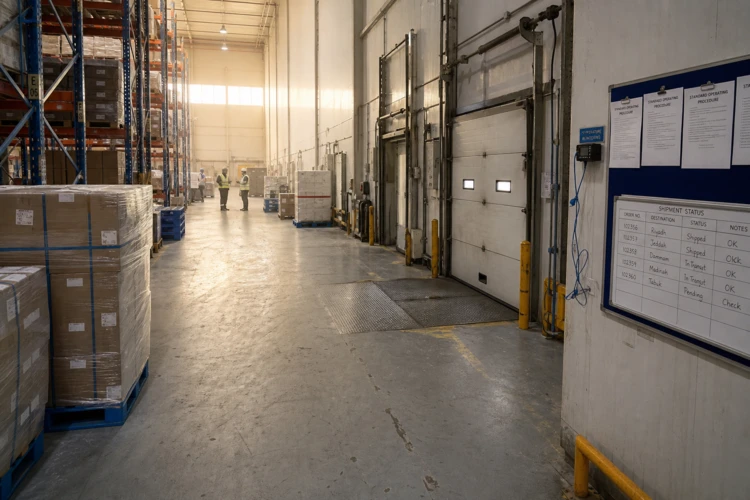
Congestion matters because it turns capacity into a theoretical number if yard and gate systems lose fluidity. A 13 July 2026 forwarder guide cited terminal yard utilisation at around 90%, alongside an estimated 20% to 25% productivity drop. It also described container release times stretching to as much as eight weeks. At the gate, the same report referenced truck queues of roughly 5 km and waits of up to three days. These are not abstract metrics; they are the practical constraints that decide whether a box can be moved onward across Saudi Arabia on schedule, and they influence carrier choices about where to connect cargo.
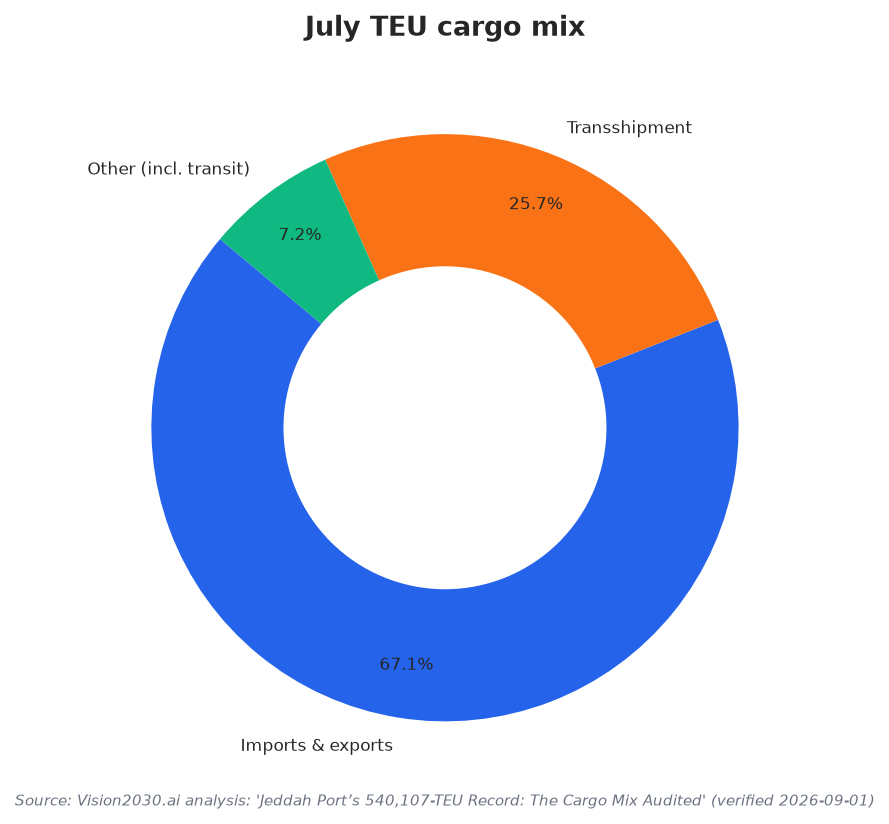
The July 2026 container record also shows why cargo mix is central to strategy. Of the 540,107 TEU handled, only 138,615 TEU, or 25.7%, was explicitly classified as transshipment. Imports and exports together contributed 362,197 TEU, or 67.1%. That composition describes a high-volume gateway first, with hub activity that is present but not dominant in that month. It also highlights a limitation in using a single record month to imply broader regional market capture, because the sources do not provide a regional denominator for transshipment share.
Investment decisions appear aimed at relieving exactly the pressure points congestion exposes, while sharpening the port’s cargo proposition. One July 2026 report says Mawani announced additional investments exceeding SAR641 million (US$171 million) over the prior three months, including three new ship-to-shore cranes, 17 rubber-tyred gantry cranes, 91 terminal trucks and seven additional cargo-handling units, plus a 200,000 square metre container terminal expansion. The same report says refrigerated cargo capacity will be doubled to 9,000 reefer plugs. For context on the port’s overall physical scale, separate technical summaries describe 62 multi-purpose berths, a total quay length of 12.3 km, and cargo handling of over 130 million tons annually.
What was the July 2026 container record at Saudi Arabia’s Jeddah Islamic Port?
How much of July 2026 volume was transshipment versus gateway cargo?
What congestion indicators were reported at Jeddah in July 2026?
What investments and equipment additions were announced for Jeddah Islamic Port in 2026?
What scale and baseline capacity figures are associated with Jeddah Islamic Port in the sources?