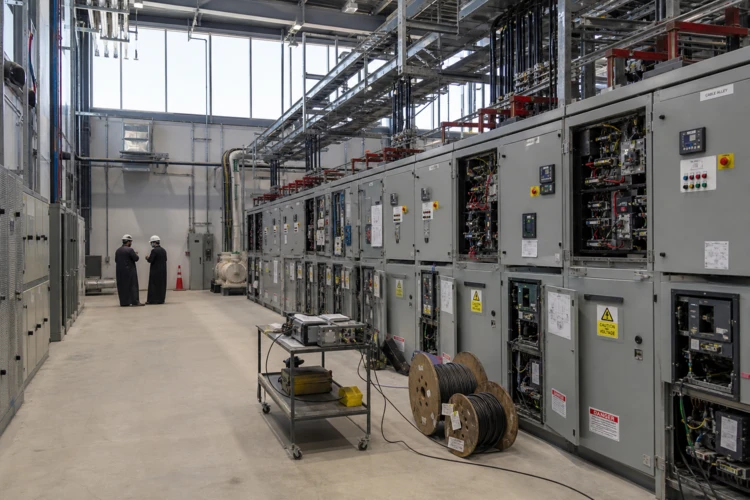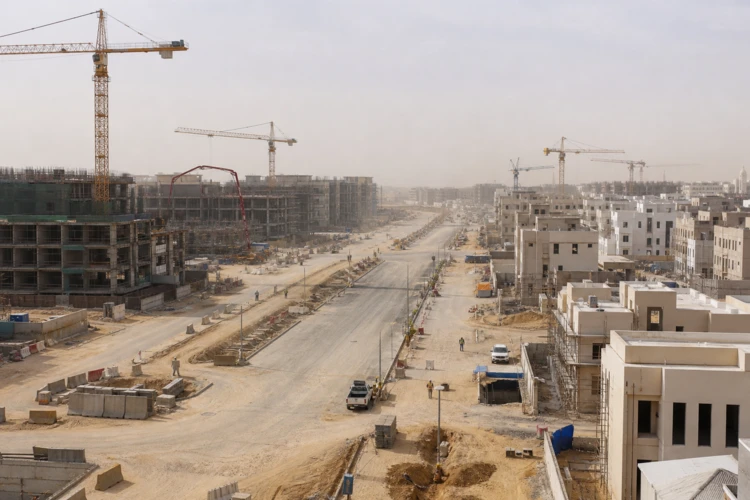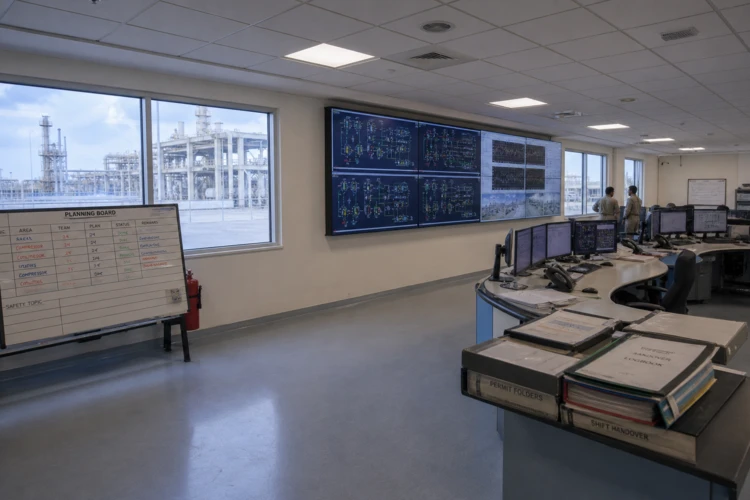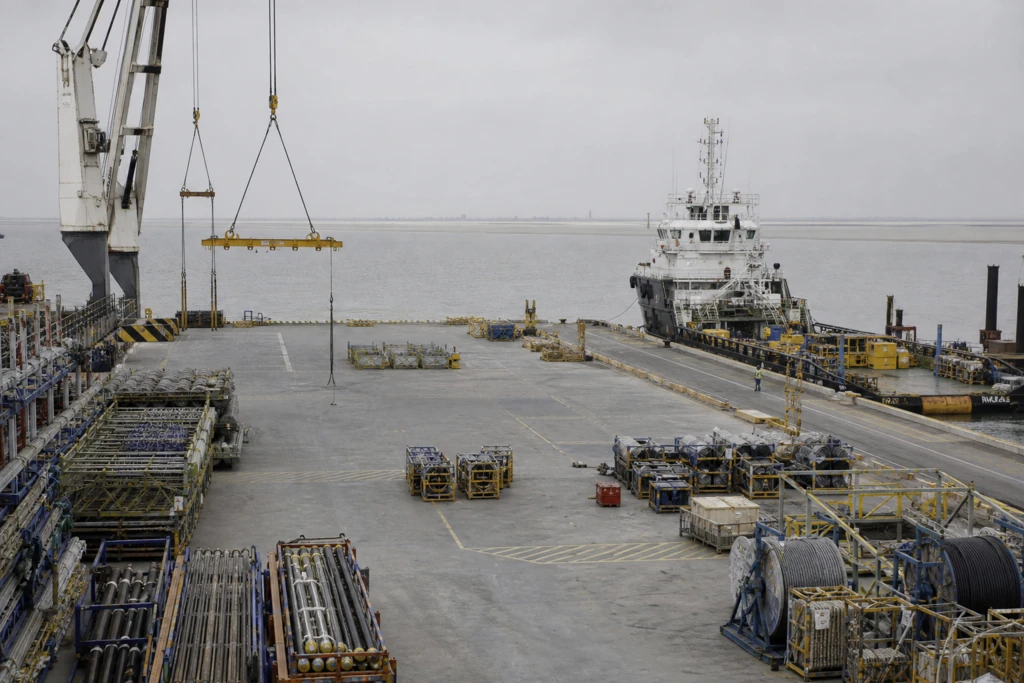
The Dorra offshore gas project is moving through a contracting phase that underlines how Saudi Arabia and Kuwait are proceeding with projects they consider crucial. MEED describes the Dorra field facilities development capex as a “show of resolve and purpose” by Saudi Arabia and Kuwait, noting the project has advanced even as regional tensions leave the fate of many vital projects “hanging in the balance.” The development is being led by a joint venture comprising subsidiaries of Saudi Aramco and Kuwait Petroleum Corporation (KPC), with tendering activity following a joint statement in February 2024 in which Kuwait and Saudi Arabia reiterated their claim to the Dorra field.
In parallel, Aramco is managing a tightly defined 2026 spending envelope. Aramco’s 2026 capex guidance is $50 billion to $55 billion, reaffirmed in a March earnings release and discussed again on its Q3 2026 earnings call. In the transcript, Aramco says it can keep 2026 CapEx within the $50 billion to $55 billion range by optimizing spending and benefiting from lower-than-planned production levels earlier in the year. The same exchange also references that the guidance takes into consideration restoration cost and injection into HUMAIN, reinforcing that the capex range is being defended even with competing calls on capital.
Where Dorra Fits in a Crowded 2026 Capital Queue
For contractors and service providers, the “who wins” question depends on how Aramco sequences work across its wider expansion and recovery priorities. An Aramco earnings preview notes the $50-55 billion capex guidance was set before the war and designed to fund expansion, naming Jafurah gas development, the Berri increment, and downstream petrochemical integration. It adds that reconstruction spending on Khurais, Juaymah, and the Ras Tanura export facility will compete with that expansion pipeline. Against that backdrop, Dorra contract awards point to the project owners’ willingness to continue advancing strategic gas infrastructure alongside other major priorities.
Aramco’s capital allocation tensions show up most clearly when cash generation is set beside shareholder distributions. A July 2026 analysis of Aramco’s asset-monetisation programme states $38.9 billion has been banked, with up to $46.5 billion more in play, describing three completed midstream transactions since 2021 and at least five more reported to be in preparation as of July 2026. The same source sets that effort against $87.6 billion of dividends Aramco has guided for 2026. It also cites Q1 2026 free cash flow of $18.6 billion and a $21.9 billion base dividend, and full-year 2025 free cash flow of $85.4 billion against $85.5 billion of shareholder distributions.
Seen through that lens, the Saudi Arabia Dorra gas field contracting wave is not just a single project story. It is part of a year when Aramco says it will stay within a $50-55 billion capex range while also dealing with restoration costs and other capital commitments. MEED’s framing of Dorra as a high-priority, resilience-signaling investment helps explain why the project continues to advance via tendering and awards. For the supply chain, the practical takeaway is that winners will be those positioned for work that aligns with owners’ strategic priorities and scheduling discipline inside a fixed 2026 capex band.
Who is developing the Dorra offshore gas project?
What is Aramco’s capital spending guidance for 2026?
How did Saudi Arabia and Kuwait describe their position on the Dorra field in 2024?
How much has Aramco’s asset-monetisation programme banked, and what else is reported to be in play?
What does the reporting suggest about why the Saudi Arabia Dorra gas field is moving forward despite wider pressures?